
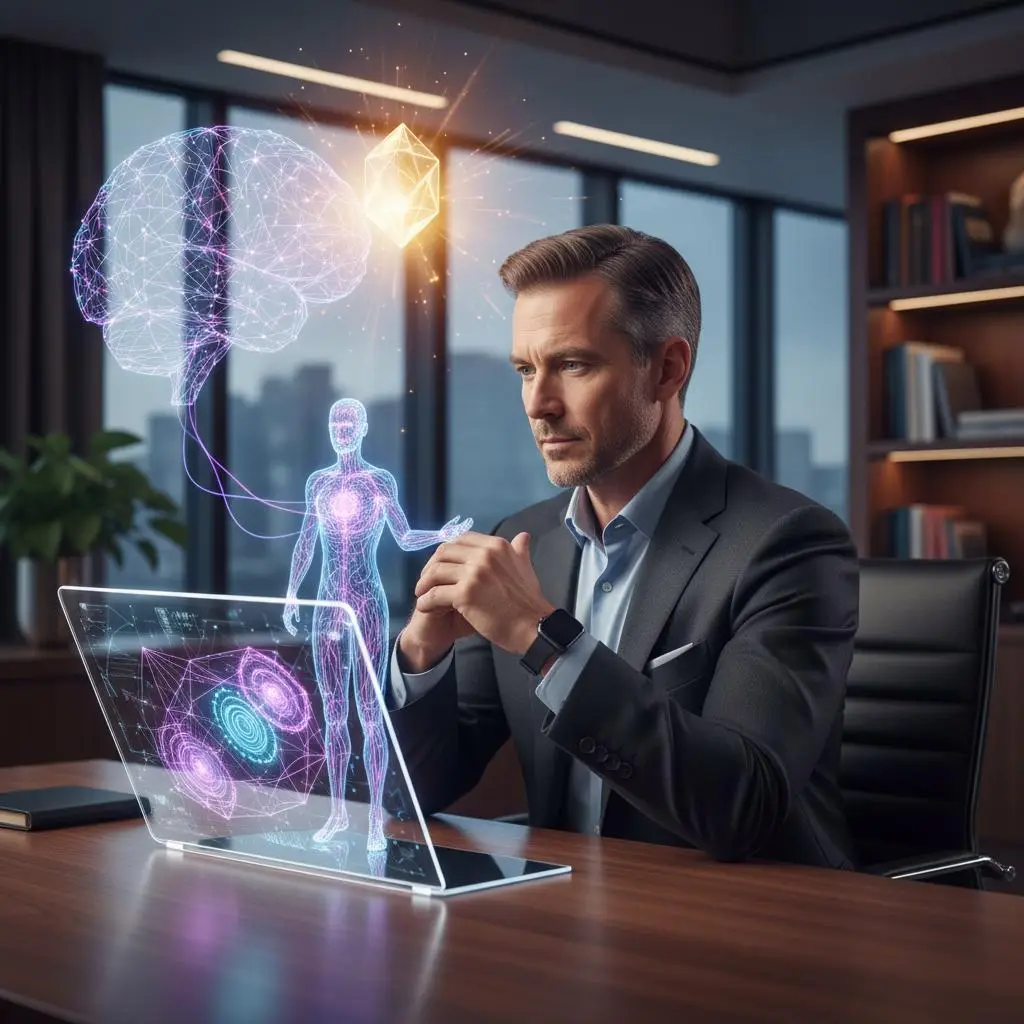
- The Neural Foundations of Transformative Coaching
- Integrating Neuroscience into Advanced Coaching Practice
- The Pinnacle Future Advantage: Psychology-Led Neuroscience for Peak Performance
- Elevating Human Potential with Neuroscience-Informed Strategies
In an era defined by algorithmic speed and computational scale, the most profound competitive advantage is no longer found in technology alone, but in the optimization of the human mind that wields it. Traditional coaching methodologies, while valuable, often address the symptoms of performance challenges without targeting the root cause: the brain’s underlying neural architecture. At Pinnacle Future, we posit that to thrive in high-stakes AI environments, leadership and development must evolve beyond conversation to conscious neural recalibration. This is the domain of Neuroscience-Informed Coaching—a sophisticated, evidence-based approach designed to upgrade the human operating system from the inside out.
The Neural Foundations of Transformative Coaching
True transformation is not a matter of willpower; it is a biological process of rewiring. Neuroscience-Informed Coaching moves beyond abstract models of change to engage directly with the physiological mechanisms of learning, adaptation, and peak performance. By understanding the interplay between key neural structures—the executive control of the prefrontal cortex, the emotional processing of the amygdala, and the memory consolidation of the hippocampus—coaches can facilitate change that is not only profound but also sustainable. This approach treats the coachee not as a set of behaviours to be modified, but as a complex adaptive system to be understood and optimized.
Understanding Brain Plasticity and Learning Agility
The foundational principle of neuroscience-informed development is Neuroplasticity: the brain’s lifelong capacity to reorganize its structure, function, and connections in response to experience. Every coaching conversation, every new insight, and every practiced behaviour physically alters the brain, strengthening some neural pathways and pruning others. This is the essence of Hebbian theory—”neurons that fire together, wire together.” A skilled coach acts as a catalyst for this process, creating the precise conditions needed to build new circuits for strategic thinking, emotional regulation, and innovative problem-solving. This targeted cultivation of neuroplasticity is what underpins true Learning Agility, the critical meta-skill for navigating the perpetual disruption of the AI-driven landscape.
The Neurobiology of Motivation and Engagement in Coaching
Motivation is not an abstract desire; it is a neurochemical state. The coaching process is profoundly influenced by neurotransmitters that govern drive and connection. For instance, the dopamine system, our primary reward and motivation circuit, is activated when a coachee makes progress toward a meaningful goal. A coach’s ability to help frame challenges, celebrate incremental wins, and connect actions to intrinsic values directly modulates dopamine release, fueling sustained effort. Simultaneously, the coaching alliance itself—built on trust and psychological safety—promotes the release of oxytocin, which reduces anxiety, enhances social bonding, and makes the brain more receptive to feedback and new perspectives. By consciously working with these neurobiological systems, we can foster a state of deep engagement where transformative change becomes not only possible, but probable.
Integrating Neuroscience into Advanced Coaching Practice
Translating neuroscientific theory into potent coaching practice requires a disciplined, psychology-led framework. It involves equipping leaders with the language and insights to understand their own cognitive and emotional machinery. This is not about diagnosing, but about empowering—providing a user manual for the brain that enables superior self-regulation, insight, and strategic foresight. It is the shift from managing behaviour to architecting the neural states that produce optimal outcomes.
Enhancing Self-Awareness and Emotional Intelligence through Brain Insights
Self-awareness begins with understanding the brain’s core tensions, particularly the dynamic between the deliberate, reflective prefrontal cortex and the rapid, reactive limbic system. By educating leaders about concepts like the “amygdala hijack”—the moment emotional reactivity overrides rational thought—coaches provide a biological basis for emotional regulation. We can then introduce practices that strengthen the neural pathways for metacognition, or “thinking about thinking.” Techniques grounded in enhancing Interoception, the perception of the body’s internal state, allow individuals to recognise the physiological precursors to emotional responses, granting them the crucial window of time needed to choose a more resourceful action. This is emotional intelligence, reframed as a trainable neural skill.
Cultivating Resilience and Stress Regulation: A Neuroscience Perspective
In high-stakes environments, chronic stress is a cognitive toxin. The sustained release of cortisol degrades neural networks in the hippocampus and prefrontal cortex, impairing memory, focus, and executive function. A neuroscience-informed approach to resilience focuses on down-regulating the sympathetic nervous system (“fight or flight”) and activating the parasympathetic nervous system (“rest and digest”). Coaches can guide clients through evidence-based practices, such as specific breathing protocols or mindfulness exercises, that have been shown to directly increase heart rate variability (HRV) and improve vagal tone. This teaches the nervous system to return to baseline more efficiently after a stressor, building physiological resilience that supports sustained high performance without burnout.
Optimizing Executive Function and Strategic Decision-Making
Executive Functions—the suite of cognitive processes including planning, working memory, and cognitive flexibility—are the bedrock of effective leadership. These functions are highly energy-intensive and susceptible to degradation from fatigue, stress, and information overload. Neuroscience-Informed Coaching provides strategies to manage Cognitive Load and implement principles of Decision Hygiene. This includes understanding and mitigating cognitive biases that are hardwired into our neural processing, such as Verification Neglect—the tendency to accept information at face value without critical scrutiny. By making leaders aware of these neural shortcuts, coaches empower them to design environments and processes that force more deliberate, logical, and strategically sound decision-making, a critical capability when navigating the complexities of AI integration.
The Pinnacle Future Advantage: Psychology-Led Neuroscience for Peak Performance
Simply knowing neuroscientific facts is insufficient. The power of this discipline lies in its expert application through a deep, psychological lens. Pinnacle Future’s methodology is not “neuro-coaching”; it is psychology-led performance strategy, profoundly enriched and validated by neuroscience. We focus on upgrading the core constraint in any technological transformation: the human operator. Our unique synthesis ensures that scientific principles are translated into actionable, high-impact strategies that deliver a Scalable Human Advantage in the face of machine intelligence.
Bridging Scientific Theory with Practical Coaching Application
At Pinnacle Future, we excel at bridging the gap between the laboratory and the boardroom. Our interventions are designed to demystify the brain and provide leaders with practical tools to manage their own cognitive architecture. This approach yields tangible shifts in performance, moving beyond incremental improvement to unlock new levels of capacity.
| Focus Area | Traditional Coaching Approach | Pinnacle Future Neuroscience-Informed Approach |
|---|---|---|
| Goal Achievement | Focuses on behavioural action plans (e.g., SMART goals) and accountability. | Designs goals to maximize intrinsic motivation and dopamine release; uses visualisation to prime motor cortex and strengthen neural pathways for success. |
| Stress Management | Discusses coping strategies and time management techniques. | Teaches physiological self-regulation techniques (e.g., breathwork) to directly modulate the autonomic nervous system and reduce cortisol levels. |
| Decision-Making | Explores past decisions and encourages reflective practice. | Educates on cognitive biases rooted in neural shortcuts; implements Decision Hygiene protocols to mitigate bias and reduce Cognitive Load. |
| Leadership Influence | Role-plays difficult conversations and provides feedback on communication style. | Focuses on building trust and psychological safety by understanding the neurobiology of connection (e.g., oxytocin) and its impact on team receptivity. |
Ethical Considerations and Evidence-Based Best Practices
The power to influence brain function carries with it a profound ethical responsibility. Pinnacle Future is unequivocally committed to an evidence-based practice, rigorously filtering out the pervasive “neuro-myths” from validated science. Our work is governed by the highest professional standards, ensuring that these powerful tools are used exclusively for the purpose of fostering human flourishing, enhancing well-being, and unlocking authentic potential. We operate in alignment with the ethical codes of leading professional bodies, such as those outlined by The British Psychological Society’s Division of Coaching Psychology, to ensure our methods are safe, respectful, and effective. The goal is empowerment, never manipulation.
Elevating Human Potential with Neuroscience-Informed Strategies
The future of leadership and organisational excellence will be written by those who can master their own biology. Neuroscience-Informed Coaching is the definitive methodology for this new era, offering a precise, powerful, and deeply human pathway to enhanced performance. It is the key to cultivating the resilience, strategic clarity, and adaptive intelligence required to not only survive but thrive alongside artificial intelligence. By focusing on the foundational hardware of the brain, we can upgrade the software of our thoughts, emotions, and behaviours. This is the ultimate competitive differentiator: a workforce whose cognitive and emotional capabilities are as intentionally cultivated as their technological tools. To explore how our psychology-led, neuroscience-informed strategies can unlock the next level of performance for your leaders and teams, we invite you to a Confidential Leadership Consultation.